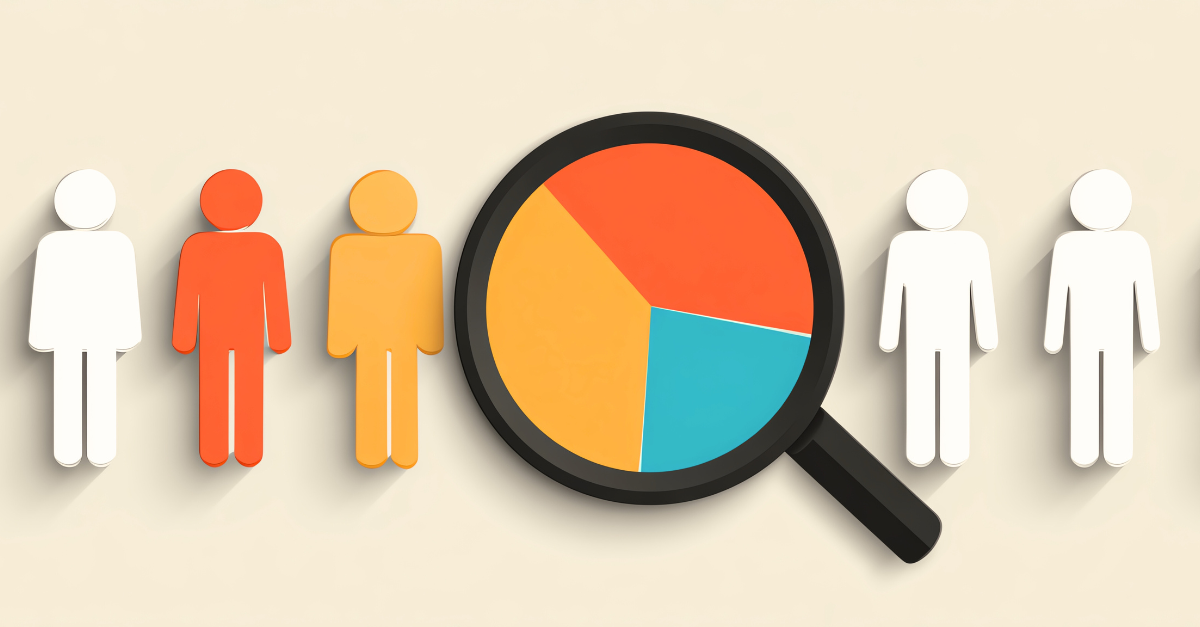
For marketing and sales teams, the answer to this question goes far beyond surface-level data and understanding basic target audience demographics. In other words, it’s not enough to have a general idea of your audience. You need to grasp the deeper layers to understand the different roles, the challenges that they face, and how people make decisions within their organizations. That is where creating buyer personas comes in. Buyer personas dive deep into who your ideal customers are. They help you to move beyond vague assumptions and get inside the minds of your buyers, making it easier to connect with their needs, motivations and priorities.
What are buyer personas and why are they important?
A buyer persona is a semi-fictional and data-driven profile based on real people that represents the characteristics of your ideal buyer. It goes beyond demographics, so a buyer persona includes the customer's motives to buy, goals to be achieved, pain points to be addressed, even behavioral patterns when engaging with your products or services. Buyer personas give you a blueprint enabling you to see through the customer’s eyes, understand what their needs are, and help you to engage with each audience at a level that feels personal.
Key components of a buyer persona.
A well-defined buyer persona typically includes information such as demographics, pain points, buying behavior, goals and motivations. Demographics provide a general understanding of your audience gathering information such as job title, role, responsibilities, department, and experience, among others. Pain points refer to the specific challenges and problems that a person experiences at work which usually are the primary motivators to seek a technology solution. Buying behavior and motivations is how and why people research, evaluate and decide on solutions driven by their needs and requirements.
Imagine, for example, that you work in the marketing or sales department of a technology company that provides a cloud-based cybersecurity software platform. Your company wants to target different decision makers within your target audience including: the head of technology, the head of finance, and the head of IT. Would you approach each of these roles with the same message? The answer is likely no. Why? Because it is important to understand that each role has its own unique needs, priorities, challenges and goals. For example, the head of technology may focus on things such as product specifications, technical viability, and scalability of your solution. For this person, security and integration of your software with their existing systems may be a top priority when deciding whether or not to invest in your product. The head of finance, on the other hand, may be concerned about cost-effectiveness, budget alignment and what ROI her company will get from subscribing to your technology solution. This person's priorities may focus on things like reducing operational costs or increasing profitability. Last, the head of IT may be overwhelmed by managing a number of disparate platforms that don't integrate well and may be looking for ways to streamline security operations with a single, easy-to-manage software platform.
In B2B, we often market not to one person but to a decision-making team. Knowing who is involved in the buying process allows for tailored messaging to each role which can increase relevance and engagement.
How buyer personas drive business impact.
Buyer personas provide a framework that can have a positive impact on your business. They can help your company to align cross-functional teams, such as marketing, product, and sales, around a shared understanding of the buyer. They can help to prioritize your efforts instead of casting a wide net, by revealing the target audiences that are most likely to yield the highest return, focusing resources in the most efficient ways possible.
In conclusion, understanding who you are selling to is a crucial part of B2B growth and success. Buyer personas are a critical component of effectively engaging with a B2B audience. This approach can drive alignment, improve engagement, and shorten sales cycles. So, before your next sales outreach or marketing campaign, pause for a minute and ask yourself: Do you truly know who you are selling to?